
There’s a famous experiment you’ve probably heard of. A researcher sits a small child at a table, puts a marshmallow in front of them, and says something that sounds almost cruel: you can eat this one now, or wait a little while and I’ll give you two. Then the adult leaves the room.
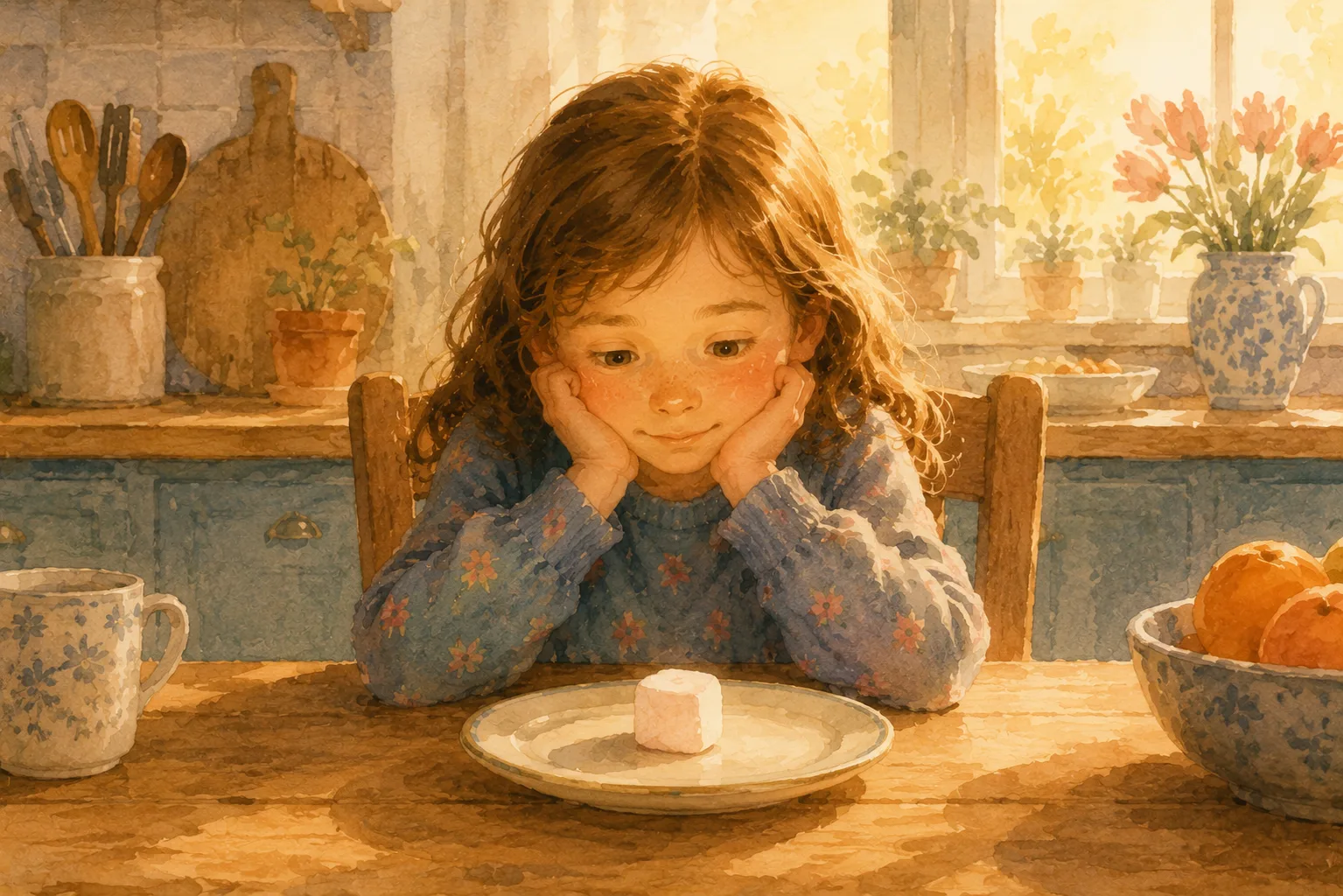
What follows is some of the most entertaining footage in all of psychology. Children sniff the marshmallow. They stroke it. One little boy licks the plate around it, apparently deciding that the plate itself doesn’t count. Some hold out for a glorious fifteen minutes. Others are chewing before the door has clicked shut.
We laugh because we recognise it. Not just in our children, but in ourselves. The wait is hard. It has always been hard.
The original study got a lot of attention because researchers later suggested that the children who managed to wait went on to do better in all sorts of ways. More recent research has been more careful about that. It turns out a child’s willingness to wait has a great deal to do with whether they trust that the second marshmallow will actually appear, and whether life so far has taught them that good things really do come to those who hold on. Which is rather the point for us as parents. Waiting isn’t a fixed trait your child either has or hasn’t. It’s something they learn, and you’re the one who teaches it.
Here’s the good news: you don’t need a lab, a stopwatch or a bag of marshmallows. Your kitchen, your car and your weekly routine are already full of chances to practise.
Take the ice cream van. That maddening jingle rolls down the street and suddenly your child needs a 99 with the urgency of a medical emergency. This is a marshmallow moment in disguise. Instead of an automatic yes or a flat no, you can offer a choice: we can get one today, or we can pop that money in your jar, and by the end of the holidays you’ll have enough for the bigger thing you keep talking about. Then let them decide. Sometimes they’ll choose the ice cream, and that’s absolutely fine. But you’ve shown them there’s a decision to be made, and that waiting has a reward on the other side of it.
Or the toy they spotted online. Everyone has it, apparently. It must be bought this instant or life as they know it will end. Try the two-week rule: write it on the calendar, and if they still want it in two weeks, you’ll sit down together and work out how to save for it. Half the time the burning desire has cooled to a shrug by Wednesday. That isn’t your child being fickle. It’s them learning the difference between wanting something and really wanting it, which is a skill plenty of grown-ups are still working on.
Pocket money is the quiet hero here. A child who gets a small, steady amount each week, rather than whatever they ask for whenever they ask for it, learns the rhythm of waiting almost without noticing. The pound they didn’t spend on sweets on Monday is still there on Saturday, and now it can join forces with next week’s pound. Watching a jar slowly fill up is a lesson no lecture can match.
The thing to hold onto is that delayed gratification was never about teaching children to go without. It’s the opposite. It’s teaching them that they can have the bigger, better thing if they’re willing to wait for it, and that they get to make that choice rather than being swept along by every jingle and advert that comes their way. Far from deprivation, that’s a kind of freedom.
It helps enormously if they see us doing it too. Children clock everything. When you say out loud, “I’d love that, but I’m saving for something bigger,” you’ve just run the marshmallow experiment in reverse, and you’re the one passing the test. You don’t have to be perfect at it. You simply have to let them see the wait happening, and see that it pays off in the end.
So the next time that ice cream van comes round, or the “please, please, please” starts up in the toy aisle, take a breath. You don’t need to win it. It’s just a marshmallow moment. And every time you let your child sit with the wait, even for a little while, you’re handing them something far more valuable than a treat.
If you’d like a gentle, story-led way to explore ideas like this one with your children, The Financial Fairy Tales books turn money lessons into adventures they’ll actually ask to hear again. You can find the whole collection at thefinancialfairytales.com.